

Listening to the Real Feelings of People with Disabilities
Time:2011-10-24
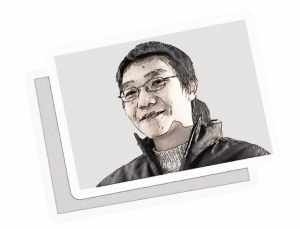 ○Liu Jingwen, Deputy Secretary General of Zheng Weining Charity Foundation.
However, I am not a traveler, at least not in Kashgar I hope to play that role, I came to Kashgar to do training and employment for people with disabilities. I wanted to get into the community and their families to understand their employment needs and their real feelings, not to take a little view with my camera and go back to the city to comfort myself. A month before I came, five disabled colleagues and social workers from the Canyou Group and the Zheng Weining Charitable Foundation had already moved in, and they recruited 68 Canyou from the Uyghur ethnic group.
Before the cab reached the courtyard of Kashgar Canyou, the sound of singing and dancing could already be heard from afar. Song and dance for Uyghur friends, like eating and sleeping, this is something that permeates their blood, although most of the Canyou have limited mobility, but they are in the song and dance in the kind of self-satisfaction, so that the constrained me that they are the happiest people under the sky.
But as the group sat and talked with me, I suddenly realized it was an illusion. As people with disabilities, they have strikingly similar experiences and sorrows as my fellow Canyou across the country. I recorded three such people:
Mayra. A very lovely girl from a very good family, but she suffered from a strange disease that caused her skin to moult constantly, and as a result, Mayra was always in a state of heat, and every night, she needed to wet her blankets and wrap them around her body to cool down before she could sleep. The growth of her bones was also affected. Mayra never entered school as a child, but she learned to speak fluent Chinese by watching TV every day, and finished middle school by sneaking her brother's books.
Kebinur. She is Mayra's friend, a very pretty girl who had polio as a child due to a medical accident. Like Mayra, she teaches herself English and Chinese at home during the day, and at night she lets her brother carry her out of the doorway to go outside in her wheelchair.
Maihemuti Jiang. Like Kabinur, he was disabled by a medical accident, and because he didn't want to overburden his family, he apprenticed himself to a barbershop, cutting customers' hair on crutches. Had a wife, but soon left him.
When I asked them why they joined Kashgar Canyou, the answer was almost the same: they wanted to eat with their own hands and didn't want to hear their mothers' sighs at home. Now there is such an opportunity, of course, they are willing to fight for it and strive for it.